
How to Read an Apartment Lease
Learn how to read an apartment lease before you sign. Check the term, rent, fees, deposit, repairs, and entry rules in Iowa and Illinois.
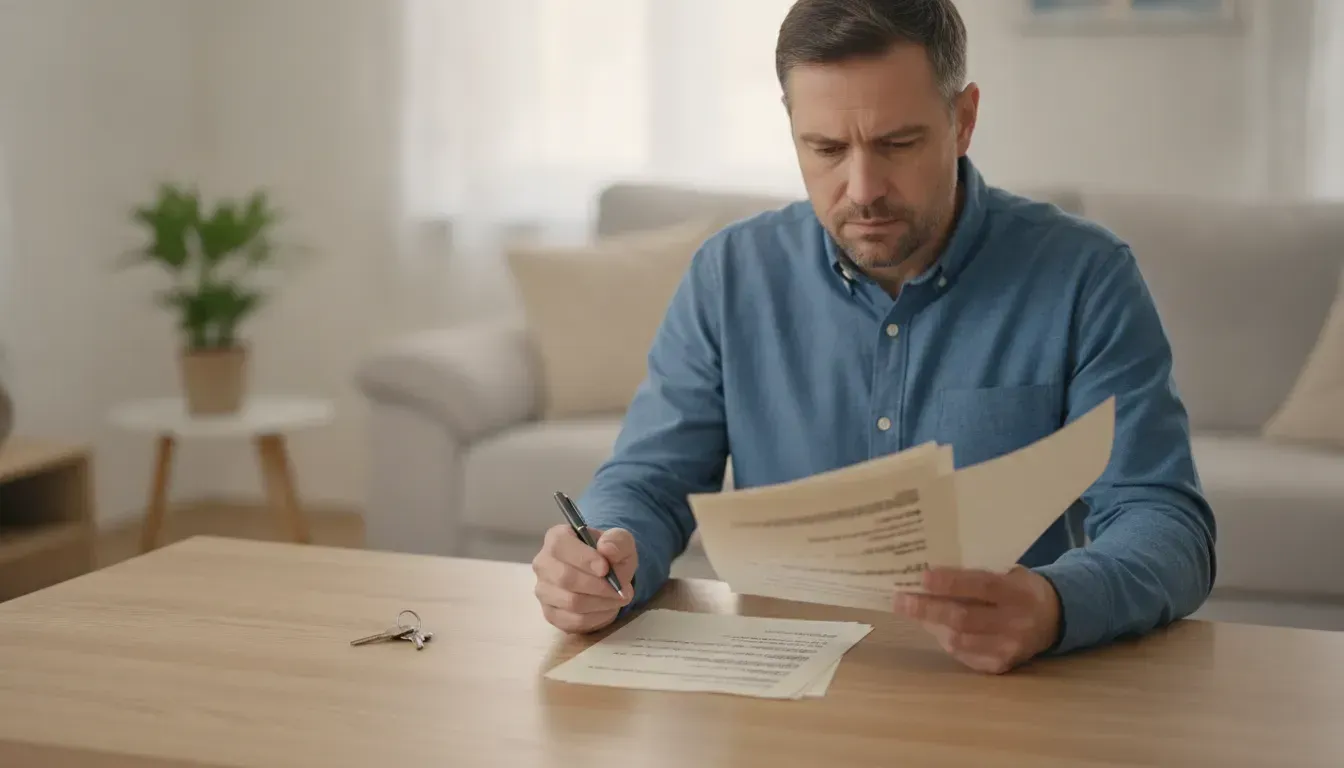
Knowing how to read an apartment lease means checking who is bound, how long the term lasts, what you pay, and which repairs and rules you accept before you sign. In the Quad Cities, Ames, and Peoria, the paper in front of you is the agreement that controls rent, fees, and day-to-day use of the home. A tour shows the unit. The lease states the deal.
Schedule a tour before you review a lease
Read every page, including attachments. Ask for a copy you can take home. If a sentence is unclear, write the question down and get the answer in the lease or in a signed addendum, not only in conversation. This guide walks the clauses renters in Iowa and Illinois should mark. It is general information, not legal advice. Your signed lease and the law that applies to that property control.
How to read an apartment lease from the first page
Start with the names, the address, and the dates. Those three items decide who is responsible and for which home.
Names and who is bound
Every adult who will live in the home and sign should be listed as a tenant. If only one roommate signs, that person may be the only one the landlord can hold to the rent, or the only one with a right to stay, depending on the wording. Read the joint-and-several clause if there is one. It often means each signer can be asked for the full rent, not only a share.
Also check the landlord or manager name. You want a real party you can reach for repairs and notices. Legacy Management leases its own rentals in the Iowa and Illinois Quad Cities, Ames, and Peoria. If you are comparing homes, confirm the management name on the lease matches the company that showed you the unit.
The exact unit
The lease should name the street address and the unit number, not only a community name. A garage, storage cage, or parking stall belongs in the same document if it is part of what you are paying for. If the lease says "a unit of similar size," ask which door you are agreeing to occupy.
Start date, end date, and term type
A fixed term has a start date and an end date, often 12 months. A month-to-month agreement renews each period until someone gives the notice the lease or state law requires. Write both dates on the first page if they are easy to miss in a longer form.
Also mark what happens at the end. Some leases end on the stated date. Others convert to month-to-month unless you or the landlord give notice. Renewal timing, rent-increase notice, and how to send a notice to vacate are separate questions. Use the lease's own renewal and notice sections for those, and do not assume a fixed-term end date works the same way as a month-to-month tenancy.
Rent, due dates, and every fee on the page
The monthly rent number is only one line. Read the payment section as a list of money you might owe.
If a fee is not listed, ask for it to be added or removed before you sign. A verbal "we do not charge that" is hard to rely on later. For a budget check before you commit, compare the full monthly number, not only base rent, with what you can comfortably pay. The guide on how much rent you can afford is a useful companion once the fee lines are clear.
Current asking rents and specials change. Read the figure in the lease you are offered, and check current vacancies for homes that are actually available. Do not assume a number from an older listing still applies.
What the deposit section should say
Find the deposit amount, what it covers, and the conditions for getting it back. A security deposit is not rent. It is money held against unpaid rent or damage beyond ordinary wear, subject to the lease and state rules.
In Iowa, Iowa Code 562A.12 limits a rental deposit to two months' rent. The landlord must return the deposit, or send a written statement of the specific reason for any withholding. That step is due within 30 days after the tenancy ends and the landlord has the tenant's mailing address or delivery instructions. The statement has to describe damage if money is kept for restoration. Ordinary wear and tear is excluded from restoration charges. Read the statute at the Iowa Legislature's copy of section 562A.12.
In Illinois, the Security Deposit Return Act, 765 ILCS 710/1, covers property-damage deductions. A residential landlord who wants to keep part of a security deposit for damage must give the tenant an itemized statement of the damage and the estimated or actual repair cost. The deadline is 30 days after the tenant vacates or 30 days after the right of possession ends, whichever is later. If that statement and the required receipts are not provided, the statute calls for the full deposit to be returned within 45 days. The official text is 765 ILCS 710/1.
Those are statewide rules about returning a deposit. They do not set the dollar amount in your lease, and a local ordinance can add steps. Read the deposit paragraph for deductions the form tries to take automatically, such as a preset cleaning charge, and ask what "ordinary wear" means in practice. The separate guide on what a security deposit is covers holding and return in more detail. This page only tells you which lines to mark before you sign.
Repairs, entry, and house rules
A lease splits work between you and the landlord. Read that split before you agree to it.
Who fixes what
Look for a maintenance section that lists tenant duties, such as keeping the unit clean, replacing light bulbs, or reporting leaks quickly. The landlord side should cover building systems that keep the home habitable, such as heat, plumbing, and the structure, unless the lease clearly assigns a specific item to you. If you are unsure whether a clog, an appliance, or a yard is yours, ask before you sign and get the answer in writing.
Also read the process for requesting a repair. Many communities want requests in a resident portal so there is a record. The tenant overview describes how Legacy Management residents pay rent and request maintenance after move-in. The lease itself still controls response expectations and any charges for damage you cause. For a broader look at what apartment maintenance usually includes, see what apartment maintenance includes.
When someone may enter
The entry clause should say why the landlord or a vendor may come in and how much notice you get for a non-emergency visit. Emergencies, such as an active leak, are treated differently from a routine inspection. If the form allows entry "at any time," ask what notice applies to ordinary repairs and showings.
Guests, pets, smoking, and parking
Guest limits, pet rules, smoking bans, and assigned parking are easy to skip because they sit in house rules or an exhibit. If you have a pet, the pet addendum is part of the lease. If you do not, a "no pets" line still matters for visiting animals. Parking should name the stall or say that parking is unassigned. A rule buried in a community handbook can still be incorporated if the lease says you agree to it, so ask for that handbook before you sign.
Insurance, early move-out, and changes on paper
Three clauses cause the most surprise after move-in: insurance, leaving early, and unsigned changes.
Renters insurance
Many leases require a renters policy and a minimum liability limit, and they ask you to list the community as an interested party. The lease should state the limit and the date proof is due. If it is silent, you can still choose coverage, but do not assume a dollar amount that is not written down. What a policy actually pays for is covered in what renters insurance covers.
Leaving before the end date
A fixed term is a promise to pay through the end date unless the lease gives an early-termination option. Read any buyout fee, notice period, and re-letting duty. A concession you received at move-in, such as a free month, may have to be repaid if you leave early. Subletting or replacing a roommate is a different permission. Do not assume you can hand the unit to someone else unless the lease says how that approval works.
Put changes in the document
Agree on a parking stall, a pet, or a repair before move-in only if that change is in the lease or a signed addendum. Handwritten notes should be initialed by both sides. An email can help, but the form you sign is what you will be asked to follow.
After you sign, keep a complete copy, including every blank that was filled in. On move-in day, document the unit's condition. The tenant move-in checklist is the place for photos and the condition form, which protects the deposit conversation later.
A simple pass before you sign
Use one sitting and a pen. You are looking for blanks, conflicts, and promises that are not on the page.
If you still need to see the home, tour it before you treat the lease as final. Photos from a listing are not a substitute for standing in the unit and then reading the matching address on page one.
Contact the leasing team with a lease question
FAQ
What should I check first when I read an apartment lease?
Check the tenant names, the full unit address, the start and end dates, the rent amount, and the due date. Those lines decide who is bound, which home you get, and what you pay. Then read fees, the deposit, repairs, and entry rules before you look at house rules.
Is a 12-month lease the same as month-to-month?
No. A 12-month lease is a fixed term that runs to a stated end date. A month-to-month agreement continues in shorter periods until the notice in the lease, or the notice state law requires, is given. Read the renewal paragraph so you know whether your fixed term simply ends or converts.
Can the landlord keep my deposit for ordinary wear?
Ordinary wear is not the same as damage. Iowa Code 562A.12 allows withholding to restore the unit to its move-in condition, ordinary wear and tear excepted. It also requires a written reason within 30 days after the tenancy ends and the landlord has your delivery instructions. Illinois 765 ILCS 710/1 requires an itemized damage statement within 30 days of vacating or the end of possession, whichever is later, before a landlord keeps deposit money for property damage. Your lease can add detail, but it does not erase those statutes.
What if something I was promised is not in the lease?
Ask for it to be added before you sign. A parking space, a pet approval, a repair, or a concession should appear in the lease or a signed addendum. If it stays only in a text or a conversation, you may have no record to point to later.
Should I sign if I have not seen the unit?
See the unit and match it to the address in the lease first. A tour confirms the home. The lease confirms the terms. If you are still choosing a community in Legacy Management's Iowa or Illinois markets, look at current listings and schedule a tour, then read the lease for that specific unit.
Share this post