Apartment Inspection What to Expect
Apartment inspection what to expect: the notice, the walk-through, and the follow-up for Quad Cities, Ames, and Peoria renters.
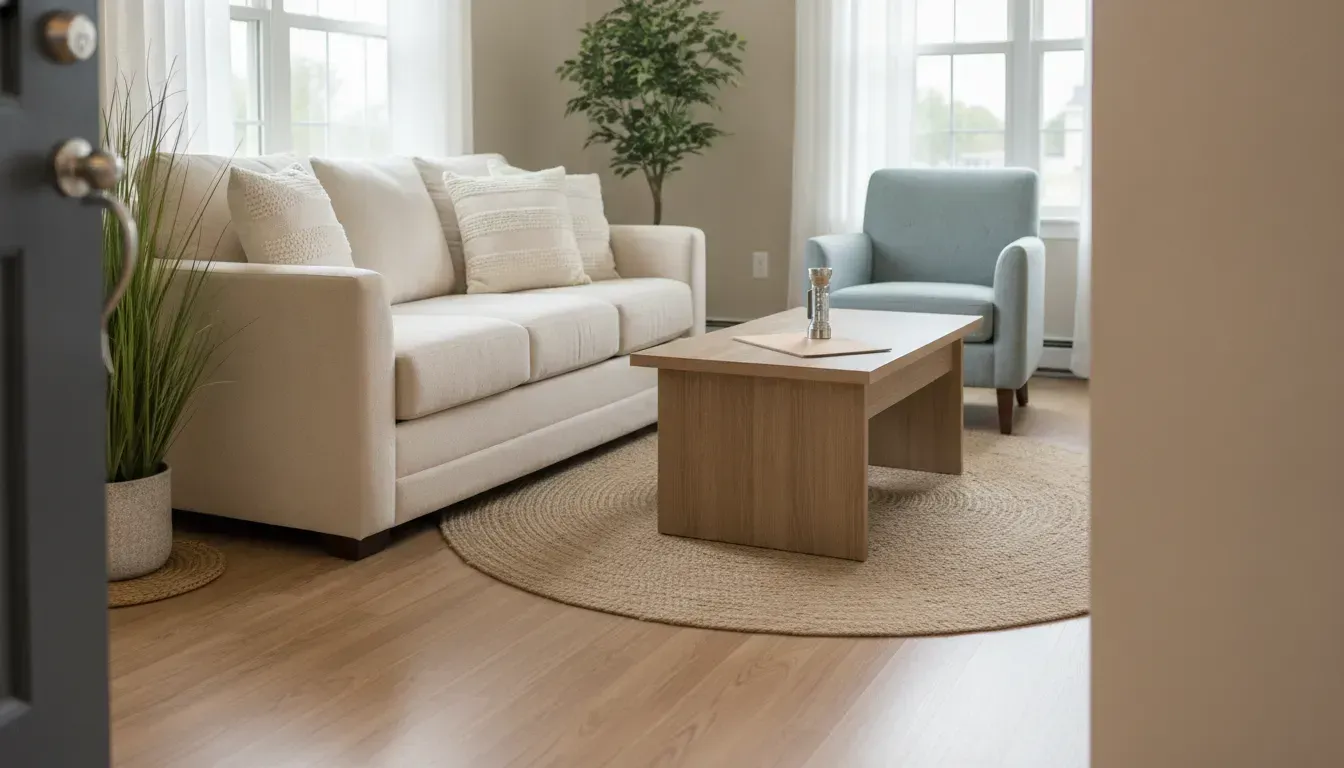
If you are searching for apartment inspection what to expect, you want the visit itself. You do not need a list of every item someone might glance at. A typical visit starts with a notice. It continues with a short walk through the rooms that need to be accessible. It ends with notes or a repair follow-up.
The exact path depends on your lease, the reason for the visit, and whether the home is in Iowa or Illinois. Nothing about a scheduled inspection means you are in trouble. It is a condition check. Knowing the order of the day makes it easier to plan around work, pets, and questions you want answered.
Read the apartment inspection guide for the areas inspectors commonly review, then use the steps below to plan the visit itself.
Apartment inspection what to expect on the day
Most renters hear about an inspection before anyone is at the door. The notice should name a date, a time or a window, and a reason. That reason might be a routine condition check, a follow-up on a repair, or a move-related walk-through. Read that notice the day it arrives. If the window conflicts with work or a medical appointment, contact the leasing office then. Do not wait until the morning of the visit.
Iowa and Illinois do not use the same entry rule. Legacy Management rents homes in both states, including the Iowa/Illinois Quad Cities, Ames, and Peoria. In Iowa, state law sets a floor for ordinary entry. In Illinois, there is no single statewide notice period. The lease and any local rule control. Do not borrow a number from a neighboring state. Do not use a city ordinance that does not apply to your building.
Iowa rentals: at least 24 hours, except emergencies
For a dwelling covered by Iowa's Uniform Residential Landlord and Tenant Law, the landlord may enter to inspect the home. Entry can also cover necessary or agreed repairs, agreed services, or a showing. Except in an emergency, or when notice is impracticable, the landlord must give at least 24 hours' notice. Entry is limited to reasonable times. A tenant may not unreasonably withhold consent for those purposes. A landlord may not use access to harass the tenant.
The statute is Iowa Code section 562A.19. A longer window in your notice is still fine. The 24-hour figure is a minimum for ordinary entry. It is not a promise that every visit lasts a set number of minutes. It is also not a promise that every property uses the same schedule.
Illinois rentals: read the lease, then any local rule
Illinois does not set one statewide number of hours for ordinary landlord entry. Your lease is the first place to look for how notice is given and what counts as a reasonable time. A city ordinance can add rules that a statewide summary will miss. Do not treat a Chicago notice period, or any other city's rule, as the Peoria standard.
If the notice you received does not match the entry clause in your lease, ask the leasing office which one controls before the visit. This article is a practical overview. It is not legal advice for a dispute about entry.
Who shows up, and do you have to be home?
On a Legacy Management rental, the person at the door is typically someone from the local maintenance or leasing team. It is not a stranger with a generic clipboard. The company is family-owned and locally operated, with homes in the Quad Cities, Ames, and Peoria. Its maintenance team cleans, inspects, and maintains those homes. You can ask who will attend. You can also ask whether a vendor, such as a plumber or an appliance tech, will come for a specific follow-up.
You do not have to rearrange your whole day to hover in each room. Many inspections proceed if the notice gave proper access and nobody is required to be present. Being home helps when you want to point out a drip, a sticking door, or a question about a prior repair.
If you cannot be there, leave a short note about anything you want reviewed. Make sure the agreed access method works. That might be a lockbox, a building process, or meeting a staff member. Do not leave a key under a mat. Do not prop a door as a substitute for the access plan in the notice.
Pets should be secured before the window starts, even if you plan to be home. A dog that is friendly with you can still block a hallway or get out an open door. If the notice says anything about animals, follow that instruction. The same goes for a roommate's schedule: tell them the window so they are not surprised by someone in the kitchen.
What happens during the walk-through?
Expect a room-by-room pass, not a search of your belongings. The inspector looks at the condition of the home. That means surfaces, fixtures, and things that affect safety or daily use. They may open a sink cabinet, test a window latch, or look at a detector. They should not need to unpack closets, read your mail, or move every box.
If a path is blocked, they may ask you to shift something so a valve, vent, or appliance can be seen. Clearing a path is enough. You do not need to deep-clean or stage the apartment.
A routine visit on an ordinary apartment often takes 15 to 45 minutes once the inspector is inside. A house, several repair checks, or a walk-through with questions can take longer. Treat that range as a planning estimate, not a service promise. If you have to leave for work, ask at the start how long they expect to be there.
While they are there, ask what they are noting and whether anything needs a separate repair request. Pointing out a condition you already reported is appropriate. Arguing about ordinary wear in the moment usually is not. If you disagree with a comment, write down the room and the wording. Follow up after the visit, when you can compare it with your own notes.
For the areas people ask about, such as walls, kitchens, baths, and detectors, use the apartment inspection guide. Do not guess from a generic checklist online.
If the inspector finds something that needs work, the usual next step is a maintenance request. An on-the-spot repair is the exception, and only when the item is already an emergency. Legacy Management offers 24/7 service for emergencies and a maintenance request path for everything else. A slow drain found on a Tuesday inspection is a work order. Water coming through a ceiling is the emergency line in your lease or resident instructions.
The tenant overview describes that maintenance response. It also describes the online portal tenants use for rent and requests.
What should you do the day before?
The day before is about access and a short list, not a weekend project.
- Confirm the date, the time window, and the reason on the notice.
- Clear a walking path to sinks, appliances, windows, panels, and shutoffs the notice says must be reachable.
- Walk the home once and write down leaks, loose hardware, or detectors that chirp.
- Secure pets, medications, and small valuables the way you would for any scheduled visitor.
- Tell roommates or guests so someone is not asleep in a room the inspector needs to enter.
- Plan your questions: the scope, how notes are recorded, and how a repair found that day gets submitted.
Do not paint over a stain, unplug a detector, or slide a rug over a soft floor to hide a condition. Hidden damage is harder to date and harder to repair. If you already submitted a request, keep the confirmation.
RentLM's tenant portal supports online rent payment, automatic payments, reminders, and payment history. The tenant pages also point residents to maintenance requests. Use the portal for the records it actually keeps, and keep your own copy of notices and messages. The tenant portal explanation covers what that login is for.
Move-in paperwork is a different job. If you are about to take possession, use the move-in checklist before you unpack. Do not treat a later routine visit as your first chance to document the home.
What should you expect after the inspector leaves?
Ask before they go whether you will get a written summary, a portal note, or nothing unless a repair is needed. Practices vary by property, so do not assume a formal report will arrive the same day. If they named a repair, ask how it will be entered and whether you need to submit it yourself. Then send a short follow-up while the visit is fresh: the date, who attended, and any item you asked them to review.
A finding is not the same thing as a bill. Ordinary wear, a building system issue, and damage a household caused are handled differently. The lease and the condition at move-in decide most of that later. Deposit questions belong with the security deposit guide, not with the inspection visit.
If a repair is yours to report, start with the maintenance overview. The maintenance responsibilities guide separates owner work from everyday resident care. For how entry, repairs, and other renter questions fit together, tenant rights is the broader starting point. It is still not a substitute for advice on your own lease.
If nobody follows up and you were told they would, contact the office once. Include the date of the visit and the item you are asking about. One clear message beats a string of guesses about what the inspector probably saw.
Where this fits if you are looking at a home
Current residents use the notice and the walk-through above. If you are still choosing a place, an inspection visit is not the tour. Current openings are on the vacancies page, with Quad Cities homes plus communities in Ames and Peoria. On a tour, ask how the community handles routine inspections and maintenance, and read that answer against the lease before you apply. Entry rules and inspection schedules are property-specific. A friendly tour answer does not replace the clause in the lease you would sign.
Questions about a notice you already received, or about how maintenance works after a visit? Contact the leasing team and include the property and the date on the notice.
FAQ: questions renters ask about the visit
Can I refuse an apartment inspection?
In Iowa, a tenant may not unreasonably withhold consent for an inspection, agreed repairs, or the other purposes in Iowa Code section 562A.19, after the required notice. An emergency is different. Entry can happen without that notice. In Illinois, start with the entry clause in your lease and any local ordinance.
A scheduling conflict is a reason to ask for a different window. It is not a reason to ignore the notice. If you think entry is being used to harass you, keep the notices and get local legal help. Do not guess from a general article.
Do I need to deep-clean before they arrive?
No. Make the rooms they need to see reachable, secure pets, and note real problems. Ordinary lived-in clutter is not the point of a condition visit. Covering damage or disabling a detector makes the follow-up worse, not better.
How long will the inspector be in the apartment?
Many routine apartment walk-throughs fall in a 15- to 45-minute range after arrival, and houses or repair follow-ups take longer. Ask the person at the door what they expect that day. The notice window can be longer than the time they actually spend inside.
Will they open closets and drawers?
They may open cabinets or access panels when they need to see plumbing, a shutoff, or an appliance connection. A condition inspection is not a search of personal drawers, mail, or storage bins. If you want a closet viewed because of a leak or a pest concern, say so. If something feels unrelated to the stated purpose, ask what they are checking and write down the answer.
What if I find a problem while they are there?
Tell them, then make sure it is recorded the way that property accepts repair requests. A comment in the hallway is easy to lose. The tenant portal and the maintenance process on the tenant page are the durable record. Use emergency instructions only for urgent safety issues. Examples include active leaking, no heat in dangerous weather, or a lock that will not secure the home.
Share this post