
Apartments With Microwave: What to Confirm Before Signing
Looking for apartments with microwave? Compare included, built-in, and countertop options, then confirm appliance details before you sign a lease.
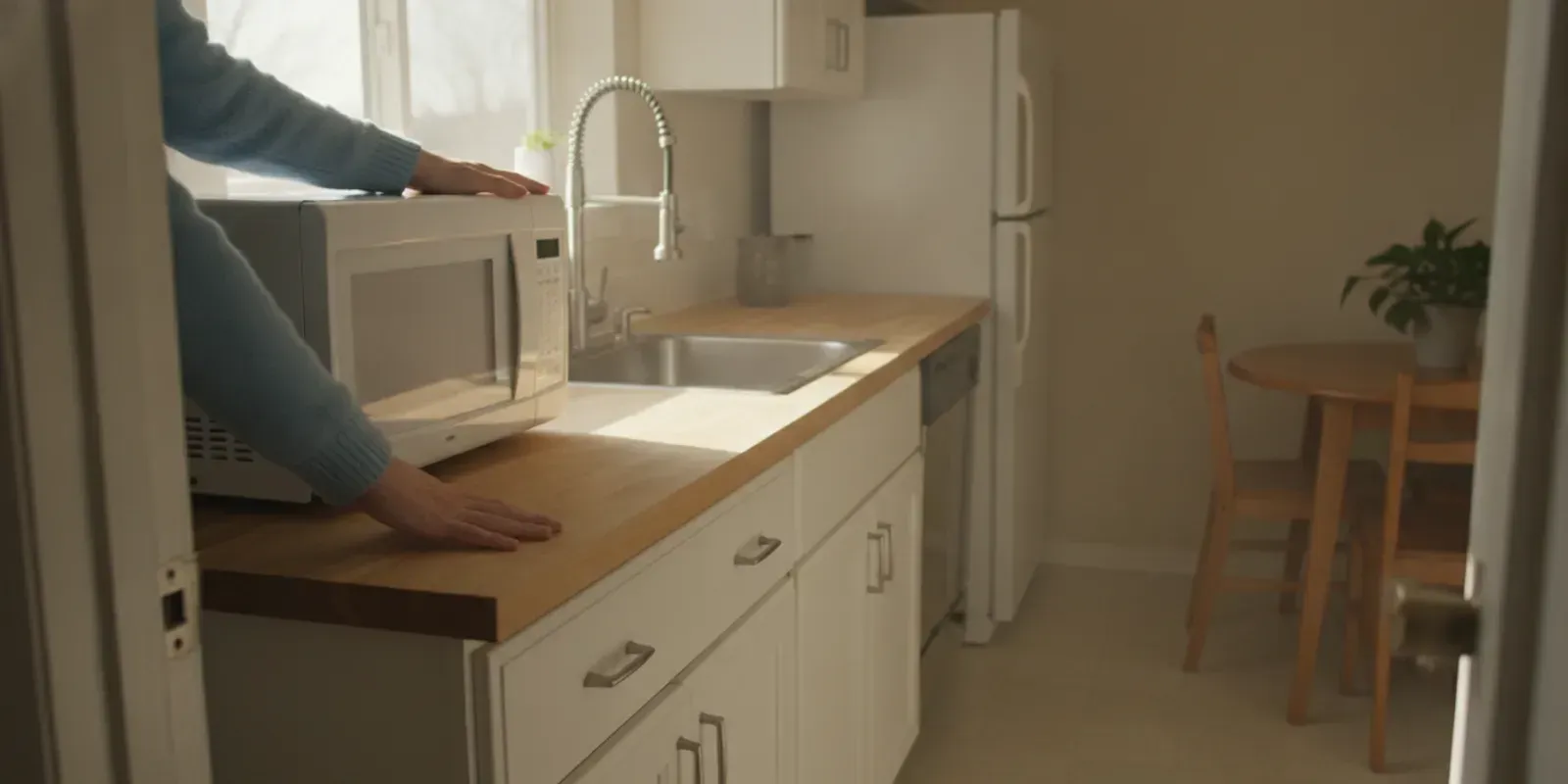
When you search for apartments with microwave, the listing may not tell you whether the appliance is included, where it sits, or who handles repairs. Those details can affect your daily routine, kitchen setup, and move-in budget. Before you choose a rental, check the listing, inspect the kitchen if possible, and get any important appliance details confirmed for that property.
Contact the leasing team with your questions
What does “microwave included” mean in a listing?
A listing can use a short phrase to describe an appliance without explaining its type or condition. “Microwave included” might mean a countertop unit, an over-the-range model, or a built-in appliance. In some homes, the microwave may be present in photos but not included with the rental. Confirm the details rather than relying on a photo or an assumption.
Look for an appliance list in the property description and review photos of the actual kitchen. If the listing is unclear, ask whether the microwave shown is part of the rental. Check whether the description refers to the specific unit you are considering, not just a general set of marketing photos. If the unit is not yet available to view, ask how the appliance details will be confirmed before you sign.
Furnished housing descriptions can list kitchen appliances as part of the provided package. For example, Kansas State University’s furnished-housing page names a microwave alongside other full-size appliances. That example is not a promise about another rental; it is a reminder to verify what “furnished” or “appliances included” means for the property you are considering.
Which kind of microwave fits your needs?
Start by distinguishing the appliance styles. Each has trade-offs in counter space, access, and how much you can verify during a viewing.
A countertop model is portable, but it takes up work surface and needs a suitable place. An over-the-range or built-in model can leave more counter area open, but it is not easy for a renter to replace or reposition. The best choice depends on your cooking habits and the specific kitchen, not on the appliance label alone.
How should you assess the microwave during a viewing?
If you can see the unit, take a few minutes to inspect it. You do not need to test every setting. Focus on whether it appears clean, intact, and easy to use, and ask the leasing contact before operating an appliance if you are unsure.
- Check the exterior and door. Look for visible damage, a loose handle, or a door that does not seem to close properly.
- Look inside. Note visible residue, rust, missing parts, or unusual odors. Do not assume that a quick cleaning resolves damage or an operating problem.
- Review the controls. See whether the display and buttons appear intact and whether the controls are understandable to you.
- Notice placement. Check whether the door opens fully without hitting a wall, cabinet, or another appliance. For a countertop model, consider how much usable counter it occupies.
- Observe the surrounding area. Look at the nearby outlet and counter or cabinet surfaces. Do not move a built-in appliance or unplug equipment without permission.
- Ask about concerns. If something looks damaged, dirty, or incomplete, describe it to the leasing team and ask how it will be addressed.
During a tour, you are checking what is visible, not certifying the appliance. If the microwave cannot be tested during the viewing, ask whether its working condition will be documented or confirmed before move-in. Do not rely on a verbal guess from someone who cannot verify the appliance.
What should you ask before applying or signing?
Ask direct questions and keep the answers with your rental records. For instance, you might write: “Is the microwave shown in the kitchen included with this specific apartment, and will it remain for the lease?” Follow with questions about condition, maintenance, and your options if the appliance is not provided.
- Is a microwave included with this particular unit, or is the photo illustrative?
- What type and location of microwave should I expect?
- Is it operating now, and will its condition be noted at move-in?
- Who should I contact if an included microwave needs repair?
- If one is not supplied, may I bring a countertop model? Are there placement or electrical requirements I should know about?
- Does the lease, appliance list, or move-in paperwork identify the microwave?
Read the lease and any property-specific inventory before signing. If an appliance is important to your decision, look for a written description or ask how the leasing team can document the answer. Do not treat a general statement about a building as confirmation that the same equipment is in every apartment.
Rent, deposits, included utilities, amenities, and lease terms can vary by property and may change. Compare the specific listing and documents for the unit you want. These practical checks can complement a broader apartment search plan; they do not replace reviewing the lease.
How does a microwave affect kitchen space and daily use?
Think about how you would use the kitchen, rather than treating a microwave as a box to tick. If you prepare several dishes at once, open the cabinet and appliance doors in your mind: will the microwave door block a prep area or cabinet? If you mainly reheat food, can you reach the controls easily? If you bring containers from work or school, is there a nearby spot to set them down?
For a countertop unit, estimate the counter space left for food preparation, a dish rack, or other items you use every day. Check whether a shelf or cart would fit without obstructing a walkway or access to cabinets. Do not assume you can mount or relocate an appliance. Ask permission before making changes to fixtures, cabinets, or electrical connections.
Also consider cleaning and upkeep. A cleanable interior and a door that closes normally can make routine use easier. If the microwave is included, clarify how to report a problem and follow the property’s instructions. For an appliance you own, you are responsible for transporting and maintaining it, and you should confirm that the property permits its use and placement.
Think about your regular routine, too. A microwave may be convenient if you reheat meals, prepare quick breakfasts, or want an easy way to warm leftovers. It may matter less if you rarely use one or prefer to cook with other equipment. If you share the kitchen, consider who will use the counter and whether the appliance location allows more than one person to work comfortably. A built-in location can be convenient but may be awkward if the controls are difficult to reach; a countertop model can be easy to access but compete for space. Try to picture ordinary use, not just how the kitchen looks in a listing photograph.
Ask what happens if an included appliance needs attention during the lease. The answer should tell you where to report the issue and whether you should stop using the unit while it is being reviewed. Follow the property’s process and do not attempt to open the casing or perform electrical work. If you bring your own appliance, keep its instructions and make sure it can sit securely in the approved location. These small planning steps are useful whether you rent in the Quad Cities, Ames, or Peoria, because the answer depends on the individual home and its setup.
For a fuller kitchen comparison, consider storage, preparation space, cabinet access, and the location of other appliances. Check that opening the microwave door does not interfere with the main walkway or make the stove difficult to reach. If you depend on a particular feature for daily meals, treat its inclusion and usability as a question to resolve before signing, not as a detail to infer from a staged photo.
Kitchen features are one part of a larger comparison. You may also want to review what a listing says about other in-unit appliances and separately confirm any costs or responsibilities tied to utilities. A useful utilities checklist can help you ask those questions without assuming that an appliance feature includes utility costs.
How can you compare listings fairly?
Use the same questions for each apartment you are considering. A simple comparison prevents a prominent kitchen photo from outweighing practical details such as condition, available counter space, or total monthly expenses. Record what the listing states separately from what a leasing representative confirms.
Mark unknown information as “confirm,” not as a yes. Then follow up before you make a decision. For current options, start with available rental listings and check the details on each property page. RentLM serves renters in the Iowa/Illinois Quad Cities, Ames, Iowa, and Peoria, Illinois; always use the current listing for the specific apartment.
What should you document at move-in?
Once you have access to the apartment, compare the microwave and kitchen with the condition described in your lease paperwork or inventory. If the microwave is included, make a note of its location and any visible damage, missing parts, or cleanliness concerns. Take clear photos of issues and follow the property’s process for submitting move-in notes. Keep copies of your report and any response.
Use the same approach for the rest of the apartment. A structured renter checklist can help you track condition details for later reference, though the move-in instructions for your property should guide what to submit and when. If you need to report an issue after move-in, check how to access the RentLM tenant portal and submit maintenance requests or communicate with the management team. Follow the instructions given for your home.
Clear records help you explain what you found and when you reported it. They also help distinguish a question about an included appliance from a request to use your own equipment. If you are unsure about a condition or the correct reporting method, contact the leasing or property management team instead of making a repair or modifying the appliance yourself.
Frequently asked questions about apartments with microwave
Does “appliances included” always mean a microwave is provided?
Not necessarily. Listings can describe different appliance packages, and photos may not show exactly what comes with a specific unit. Check the property’s written details and ask the leasing contact to confirm whether a microwave is included.
Can I bring my own microwave if the apartment does not have one?
Ask the leasing team before bringing or installing an appliance. Confirm where it may be placed and whether there are any property requirements. Do not mount a microwave, alter cabinetry, or change electrical connections without permission.
What if an included microwave does not work after I move in?
Use the property’s maintenance reporting process and describe what is happening. If available, include a photo or other details requested by the management team. Avoid attempting a repair yourself unless you have been specifically authorized and qualified to do so.
Should I choose an apartment based on its microwave?
Consider it as one practical feature alongside location, layout, lease terms, total costs, and the condition of the home. Compare the actual unit and get important details confirmed, then choose the apartment that fits your needs overall.
Before signing, verify whether the microwave is included, review the specific unit’s condition and documents, and keep a written record of answers that matter to you. That simple process helps you plan for move-in and avoid relying on assumptions about a kitchen appliance.
To compare your options, start with the current listings and contact the leasing team with any unanswered questions about a particular apartment.
Share this post