Tenant Move-Out Checklist: Steps Before You Leave
Use this tenant move out checklist to plan notice, cleaning, documentation, key return, address updates, and final records before leaving a rental.
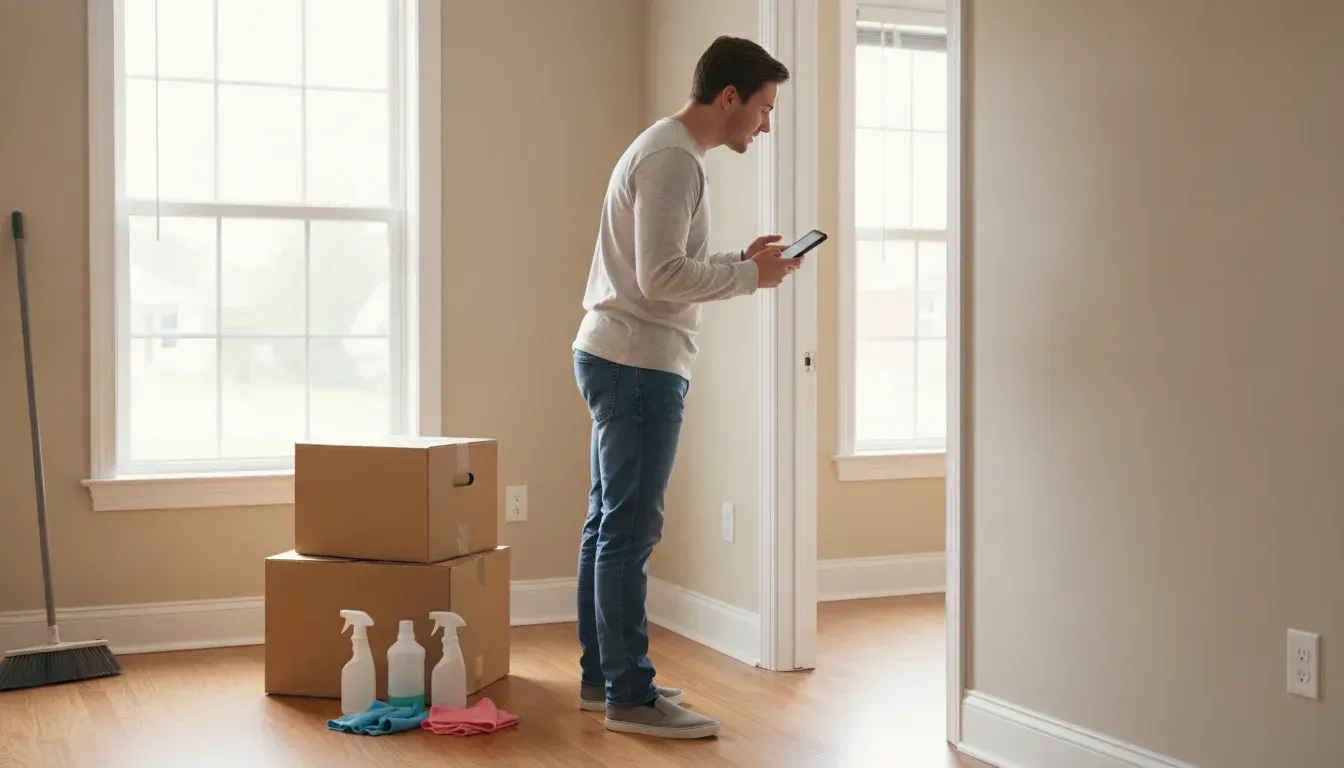
Moving out of a rental is easier when you work from a plan instead of trying to remember everything on the last day. This tenant move out checklist covers the practical steps to take before you leave, from reviewing your lease and documenting the home to cleaning, returning keys, and updating your address.
Ready to plan your next move? Review current rental vacancies from RentLM, or contact the leasing team with questions about available homes and apartments.
Tenant move-out checklist at a glance
Save or print this short version, then use the detailed sections below to work through each item:
- Review your lease, notice requirements, move-out date, and written move-out instructions.
- Give notice in the method and time frame required by your lease and applicable law.
- Document the rental's condition with dated photos or video after your belongings are removed.
- Clean the home, remove personal property, and address damage that is your responsibility.
- Schedule utility changes and keep service active through the date required by your lease.
- Return every key, access device, garage opener, parking tag, and other property-issued item.
- Provide a forwarding address or delivery instructions for deposit correspondence when requested.
- Keep copies of your notice, photos, receipts, key-return confirmation, and final communication.
1. Start with your lease and move-out instructions
Your lease is the first place to look because move-out procedures can vary by property and agreement. Find the sections covering notice, the end date, cleaning, alterations, utilities, inspections, keys, and security deposits. Also check any move-out letter, resident portal message, or written instructions provided for your home.
Write down the exact date you expect to surrender possession. If you are uncertain whether your planned date matches the end of the lease term, ask the leasing team in writing before making moving arrangements. Do not assume that moving your belongings out automatically ends your financial responsibility under the lease.
For Iowa renters, Iowa Code section 562A.34 addresses written notice for periodic tenancies, including a month-to-month tenancy. The rule can depend on the type and term of tenancy, so read your lease and obtain location-specific guidance rather than treating a general checklist as legal advice. Read the Iowa Code text for section 562A.34.
2. Give written notice and confirm the move-out date
Give notice using the method required by your lease. If the lease directs you to use a portal, email, a written form, or another channel, follow that instruction and save the confirmation. Include your name, rental address, intended move-out date, and a reliable way to reach you.
Ask for written confirmation of the date and any property-specific instructions. If more than one adult is named on the lease, confirm whether each tenant must sign or submit notice. Keep the original message and any reply in a folder you can access after leaving.
Illinois renters should also review their lease and local rules before giving notice. The Illinois Attorney General's Landlord and Tenant Rights Laws guide explains that written notice is important and that a 30-day notice is normally sufficient in many situations unless the lease requires a longer period. It is general information, not a substitute for legal advice about a specific tenancy.
3. Document the rental after it is empty
Once your furniture and personal belongings are out, walk through every room and record the condition. Take clear, dated photos or video of floors, walls, ceilings, doors, windows, appliances, cabinets, bathrooms, fixtures, closets, outdoor areas, and any included equipment. Open cabinets and closets so the record is useful later.
Compare the condition with your move-in photos, inspection report, or written list of existing issues. Your goal is not to make the home look perfect in a photograph. It is to create an accurate record that separates pre-existing conditions and ordinary wear from damage that occurred during your tenancy.
A U.S. Department of Housing and Urban Development sample move-in and move-out inspection form includes areas such as hardware, floors, walls, ceilings, appliances, plumbing fixtures, doors, locks, lighting, and other equipment. You can use its categories as a reminder, even if your rental does not use that exact form. Review HUD's sample move-in and move-out inspection format.
4. Clean and remove everything you brought in
Clean according to your lease and the property's instructions. A practical final pass usually includes:
- Remove food, trash, and personal items from rooms, cabinets, closets, the refrigerator, and outdoor storage.
- Wipe counters, cabinets, appliances, sinks, and fixtures.
- Clean bathrooms, including the toilet, tub or shower, vanity, and floor.
- Vacuum or sweep floors and clean other floor surfaces as directed.
- Remove temporary hooks, unapproved hardware, decorations, and other alterations if the lease or instructions require it.
- Check patios, porches, garages, storage areas, and parking spaces for belongings and debris.
Do not use a product or repair method that could damage a surface. If you are unsure how to address a stain, wall mark, appliance issue, or fixture problem, ask for instructions before attempting a repair. Keep receipts for approved supplies or authorized work.
5. Separate normal wear from damage
Renters are generally expected to return a home in the condition required by the lease, while ordinary wear from normal use is treated differently from damage. The exact standard can depend on the lease, the property, and applicable state or local law. Make a room-by-room list of anything that is broken, missing, heavily stained, or changed from the beginning of the tenancy.
Do not patch, paint, replace fixtures, or hire a contractor without checking whether the lease or property instructions allow it. A well-intended repair can create a new problem if the materials or finish do not match. Report unresolved maintenance concerns through the approved channel and keep the request number or written response.
If you want more background on how deposits can relate to move-in and move-out condition, read RentLM's practical guide to security deposits. That guide covers deposit concepts in more detail; this checklist focuses on the actions to complete before leaving.
6. Handle utilities, services, and belongings
Review which utilities and services are your responsibility through the move-out date. Schedule final readings, transfers, or cancellations early enough to avoid an interruption before you surrender the home. Save final bills or confirmation numbers, and keep service active for the period required by your agreement.
Cancel or update recurring deliveries, renters insurance records, internet service, parking arrangements, storage access, and any local services tied to the old address. Check with the property or utility provider before removing a service that may be included or managed by someone else.
Do one last sweep after movers leave. Look behind doors, inside appliances, on shelves, in outdoor spaces, and in shared or assigned storage. Leaving personal property behind can create extra delays or charges under the lease.
7. Return keys and access items
Return all property-issued items by the deadline and method stated in your instructions. This may include unit keys, mailbox keys, building fobs, garage or gate remotes, parking permits, pool or amenity passes, and storage keys. Do not leave items in an unofficial location unless you have written instructions to do so.
Ask for a receipt, email confirmation, or other record showing what you returned and when. If you use a drop box or after-hours process, photograph the envelope or package and note the date and time. Keep that evidence with your move-out photos.
8. Give a forwarding address and keep final records
Provide a forwarding address or delivery instructions through the channel required by the lease or property. This helps ensure that deposit correspondence and other final notices can reach you. Separately, submit a change-of-address request to the U.S. Postal Service and update banks, employers, insurers, government agencies, subscriptions, and other senders. Review USPS mail-forwarding guidance.
Keep a move-out folder containing your notice, lease, instructions, inspection documents, photos, videos, cleaning or repair receipts, utility confirmations, key-return proof, forwarding address, and final messages. Do not rely on access to a resident portal after you leave. Download or save important records while you still have access.
What happens to a security deposit after move-out?
Deposit rules vary by state, local law, property type, lease, and the facts of the tenancy. In Iowa, Iowa Code section 562A.12 says a landlord must, within 30 days after termination of the tenancy and receipt of the tenant's mailing address or delivery instructions, return the deposit or provide a written statement with specific reasons for withholding all or part of it. The statute also addresses reasonable deductions and ordinary wear and tear. Read Iowa Code section 562A.12.
Illinois rules can differ. The Illinois Attorney General guide explains that the Illinois Security Deposit Return Act can require a return within 45 days in covered buildings of five or more units when stated conditions are met, and it describes itemized-damage notice requirements. Because coverage and requirements depend on the situation, Illinois renters should read the official guide and seek qualified local advice if a dispute arises.
Keep your records and communicate in writing if you have a question about a deposit or move-out charge. Avoid assuming that a specific deadline or deduction rule applies to every rental in Iowa or Illinois.
Move-out day checklist
- Confirm all personal belongings and trash are removed.
- Complete the final clean and take empty-unit photos or video.
- Check appliances, cabinets, closets, bathrooms, storage, parking, and outdoor areas.
- Record utility meter information if your instructions require it.
- Return keys, fobs, remotes, passes, and other access items.
- Submit your forwarding address or delivery instructions.
- Save written confirmation of surrender, key return, and any inspection.
Looking for your next rental? Search current RentLM vacancies and review each property's details, or contact the leasing team for help with next steps. You can also use the tenant portal for documented resident account functions when you are an active RentLM tenant.
Frequently asked questions
How early should I start a tenant move-out checklist?
Start as soon as you know you may move. Review your lease first, confirm the required notice period and move-out date, and then schedule cleaning, movers, utilities, and key return. Completing the documentation and address steps before the final day reduces last-minute problems.
Should I take pictures when I move out?
Yes. Dated photos or video can help you keep an accurate record of the home's condition after your belongings are removed. Capture wide views and close-ups, save the files in more than one place, and compare them with your move-in records.
What should I do if I cannot complete a repair before moving?
Review your lease and contact the property through the approved maintenance or leasing channel. Describe the issue, ask whether any action is needed, and keep the written response. Do not make an unauthorized alteration or repair that could worsen the condition.
Where should I send my forwarding address?
Use the method named in your lease or move-out instructions, such as a resident portal, written form, or email. You should also submit a separate change-of-address request through USPS and update important organizations directly.
Is this checklist legal advice?
No. It is general renter education. Lease terms, local ordinances, state law, subsidized housing rules, and individual facts can change the answer. Review your lease and consult a qualified local housing or legal professional about a specific dispute.
Sources: Iowa Code section 562A.12; Iowa Code section 562A.34; Illinois Attorney General, Landlord and Tenant Rights Laws; HUD sample move-in and move-out inspection format; USPS Standard Forward Mail.
Share this post